

When you're ready to take the leap into franchise ownership, one of the biggest decisions you'll face is whether to buy an existing franchise or start fresh with a brand new location. Both paths can lead to success, but they impact your wallet, and your timeline, in very different ways.
The answer isn't one-size-fits-all. Your choice depends on your financial situation, risk tolerance, and how quickly you need to see returns. Let's break down the real costs, benefits, and financial implications of each option so you can make the smartest decision for your investment.
THE MYTH ABOUT FRANCHISE STARTUP COSTS
Here's something most people get wrong: they assume starting a new franchise is always cheaper than buying an existing one. That's not necessarily true.
While a new franchise might have a lower initial franchise fee, typically between $35,000 and $50,000, the total investment tells a completely different story. When you start from scratch, you're looking at real estate costs, construction and renovations, equipment purchases, initial inventory, staff recruitment and training, and grand opening marketing expenses. When you add it all up, new franchise startup costs can easily exceed $100,000 to $500,000 or more, depending on the industry.
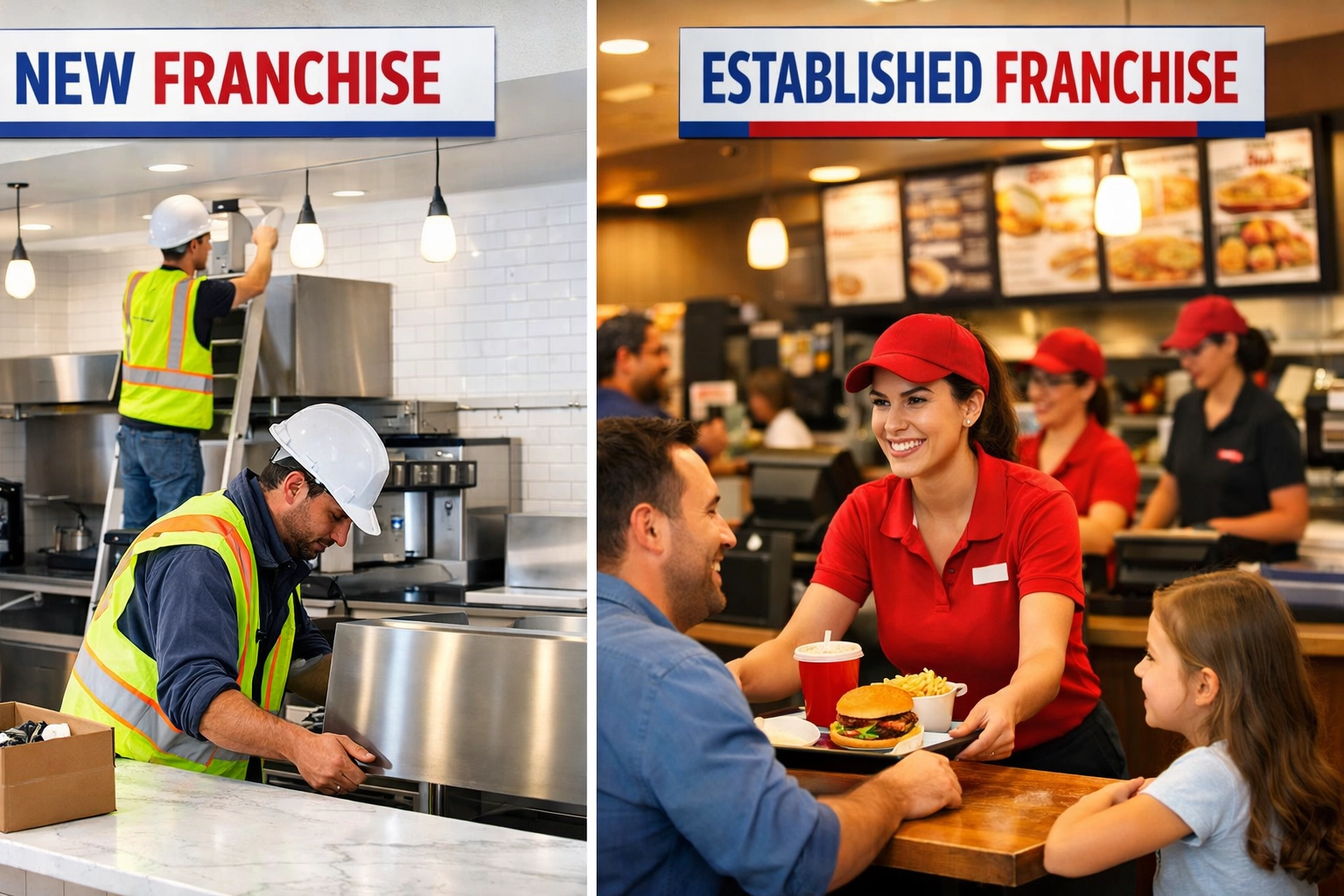
Buying an existing franchise might require more upfront capital, usually 2-3 times the business's yearly profit, but you're skipping many of those initial expenses. The equipment is already there. The staff is trained. The customers already know where you are. When you factor in the total investment, a franchise resale vs new startup might actually cost you less overall.
BUYING AN EXISTING FRANCHISE: THE PROS
Let's talk about why purchasing an established franchise can be a smart financial move.
Immediate Revenue
This is the game-changer. An existing franchise generates cash flow from day one. You're not waiting six months to a year to see your first profit. You walk in, and the business is already operating, which means money coming in while you're still learning the ropes.
Historical Financial Data
Instead of relying on projections and best-case scenarios, you get to see real numbers. How much revenue did this location generate last year? What are the actual operating expenses? This transparency helps you make an informed decision about your ROI on franchise investment and reduces financial surprises.
Easier Financing
Banks love proven track records. When you're seeking financing for a franchise resale, lenders are often more willing to approve loans because they can evaluate actual performance data rather than projections. This can mean better loan terms and higher approval rates.
Established Customer Base
You're not starting at zero. The business already has loyal customers, established supplier relationships, and a reputation in the community. This built-in foundation can save you thousands in marketing costs and months of brand-building effort.
Trained Staff and Systems
The operational infrastructure is in place. Employees know their jobs. Systems are running. You can focus on growth and optimization rather than figuring out basic operations from scratch.
BUYING AN EXISTING FRANCHISE: THE CONS
Of course, there are trade-offs to consider.
Higher Upfront Investment
You'll typically pay more initially than a new franchise fee alone. If the business generates $200,000 in annual profit, expect to pay $400,000 to $600,000 for the purchase.
Inheriting Problems
Not all existing franchises are gems. You might be buying into deferred maintenance issues, outdated equipment, or a damaged reputation. Due diligence is absolutely critical when evaluating a franchise resale.
Less Flexibility
The culture, location, and operational approach are already established. If you want to put your own stamp on the business, you'll have less freedom than starting fresh.
Why Is the Owner Selling?
This is the million-dollar question. Sometimes it's legitimate retirement or relocation. Other times, it's declining sales, market saturation, or operational challenges. You need to understand the real reason before signing anything.

STARTING A NEW FRANCHISE: THE PROS
Now let's look at the advantages of building something from the ground up.
Lower Initial Franchise Fee
That franchise fee is typically lower than purchasing an existing business outright, which can make new franchises more accessible if you're working with limited capital.
Build Your Own Culture
You get to hire your own team, set your own standards, and create the business environment you envision. You're not inheriting someone else's mistakes or management style.
Modern Equipment and Facilities
Everything is brand new: no deferred maintenance, no outdated equipment. You're starting with the latest technology and systems the franchisor offers.
Choose Your Location
Want that prime corner spot with great visibility? When you start new, you have more control over site selection, assuming territory availability.
Full Franchisor Support
Most franchisors provide comprehensive training, grand opening support, and dedicated assistance during your launch phase. You'll receive maximum support as you're getting started.
STARTING A NEW FRANCHISE: THE CONS
The challenges of starting fresh are real: and expensive.
The Total Investment Is Higher Than You Think
Remember those franchise startup costs we mentioned? Real estate, construction, equipment, inventory, and pre-opening expenses add up fast. Your actual investment can far exceed the initial franchise fee.
No Revenue During Ramp-Up
You're paying rent, utilities, staff, and all operating expenses before you've served your first customer. Most new franchises take a year or more to reach profitability, meaning you'll need enough capital to cover losses during that period.
Uncertainty and Risk
You're working with projections, not proven results. Will customers find you? Will your location succeed? There's no historical data to guide your expectations, which means higher financial risk.
Building Everything From Scratch
Hiring staff, establishing supplier relationships, building a customer base, and creating operational systems: it all takes time and money. You're paying for this learning curve with both.
THE REAL COST COMPARISON
Let's put some numbers to this. Here's what a typical scenario might look like:
New Franchise Total Investment:
- Franchise fee: $45,000
- Real estate (lease deposits, improvements): $150,000
- Equipment and fixtures: $100,000
- Initial inventory: $25,000
- Working capital (6 months): $75,000
- Grand opening marketing: $15,000
- Total: $410,000
Existing Franchise Purchase:
- Purchase price (3x $150,000 profit): $450,000
- Transfer fee: $10,000
- Minor renovations: $20,000
- Working capital: $20,000 (less needed with immediate revenue)
- Total: $500,000
The existing franchise costs $90,000 more upfront, but it's generating $150,000 in profit from day one. The new franchise needs 12-18 months before reaching that same profit level. When you factor in the opportunity cost and the additional working capital needed to cover that ramp-up period, the existing franchise can actually deliver better ROI on franchise investment in the first few years.

FINANCING YOUR FRANCHISE INVESTMENT
Regardless of which path you choose, understanding your financing options is crucial.
SBA Loans
The Small Business Administration's loan programs are designed specifically for franchise purchases. SBA 7(a) loans can cover up to $5 million, with lower down payments and better terms than conventional loans. Both new and existing franchises can qualify, though established businesses often have an easier approval process.
ROBS (Rollover for Business Startups)
This strategy allows you to use your 401(k) or IRA funds to invest in your franchise without paying taxes or early withdrawal penalties. It's a powerful option when you have retirement funds but want to avoid traditional debt. ROBS works for both new franchises and resales.
Seller Financing
When buying an existing franchise, sometimes the seller will finance part of the purchase price. This can reduce your upfront capital requirement and demonstrates the seller's confidence in the business.
Conventional Loans and Home Equity
Banks may offer conventional business loans, or you might leverage home equity. These options typically require strong credit and substantial collateral.
HOW TO MAKE THE RIGHT CHOICE FOR YOUR WALLET
Your decision should be based on honest answers to these questions:
What's your financial situation? If you have limited capital but strong credit, a new franchise with SBA financing might work. If you have more cash available and want faster returns, an existing franchise makes sense.
What's your risk tolerance? Are you comfortable with uncertainty and building from scratch? Or do you need the security of proven cash flow?
What's your timeline for profitability? Can you afford to operate at a loss for 12-18 months, or do you need income immediately?
What are your strengths? Are you a builder who loves creating systems, or an optimizer who excels at improving existing operations?
What does the market data show? Is this franchise concept proven in your market? Are resales available, and if so, why are they selling?
HOW FRANCHISE SENSE HELPS YOU NAVIGATE THESE CHOICES
This is exactly where expert guidance makes the difference between a smart investment and an expensive mistake.
At Franchise Sense, we help you evaluate both options objectively. We analyze available franchise resales in your market, review financial performance data, and compare it against starting new. We connect you with franchisors, help you understand the real costs involved, and match you with financing options that fit your situation.
Our services are completely free to you: we're compensated by the franchisors, not by you. That means you get expert consulting and market insights without any cost or obligation.
We've helped first-time entrepreneurs, just like you, make this exact decision, and we'll walk you through the financial analysis specific to your circumstances and goals.

THE BOTTOM LINE ON YOUR WALLET
There's no universal answer to whether buying an existing franchise or starting new is better financially. It depends on your capital, timeline, and risk tolerance.
What we know for certain is this: buying an existing franchise typically costs more upfront but generates immediate revenue and involves less risk. Starting a new franchise might have a lower initial fee, but the total investment: when you include all startup costs and the ramp-up period: can actually be higher.
The smartest approach? Evaluate both options with real data and expert guidance before making your decision.
Don't make this choice in a vacuum. Let's look at what's available in your market, analyze the numbers together, and determine which path gives you the best return on your franchise investment.
Schedule your free consultation today at www.bookwithkirk.com and let's find the franchise opportunity that makes the most sense: for your goals and your wallet.
Ready to explore franchise ownership? Visit Franchise Sense to discover how we help entrepreneurs make smart franchise investments( at no cost to you.)