
Building Kidz School combines early childhood education with music, dance, and theater. The concept aims to make performing arts part of a child’s academic experience, not simply an add-on, while serving children from infancy through school age.
For a prospective owner, the appeal is clear: a differentiated preschool model with recurring tuition revenue and financial performance information in its Franchise Disclosure Document (FDD). The investment, however, can reach seven figures, and reported results vary widely between schools. The useful question isn’t whether one school achieved a strong result. It’s whether the investment, location, staffing plan, and ramp-up period make sense for your circumstances.
WHAT DOES A BUILDING KIDZ SCHOOL DO?
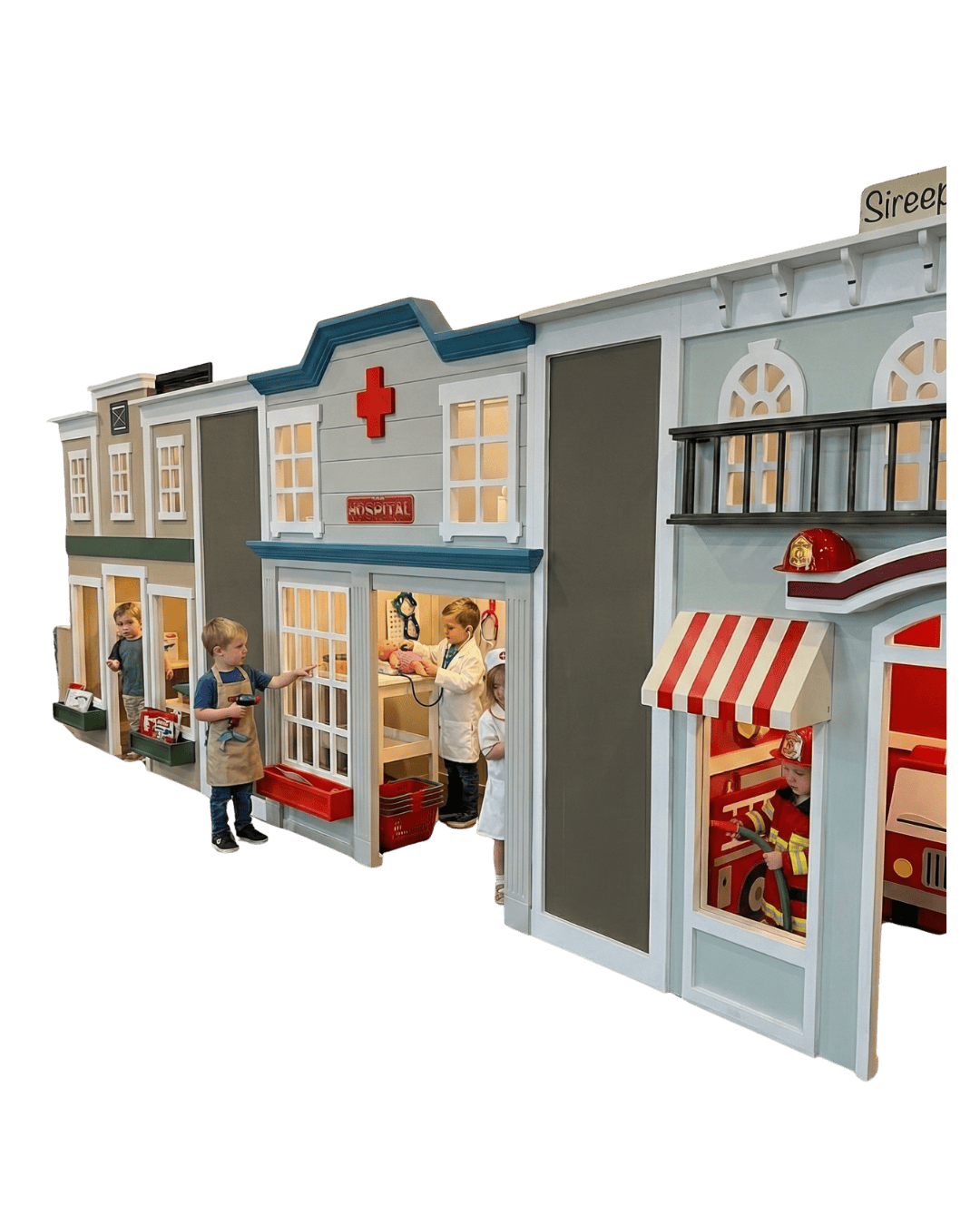
Building Kidz offers infant and toddler care, preschool, kindergarten, and after-school programs. Its signature performing arts curriculum integrates music, dance, and theater into age-appropriate learning. The company describes its broader approach as whole-child development, with academic, social, emotional, physical, cognitive, and communication goals.
The official school website describes weekly performing arts classes and two Broadway-style productions each year. Its franchise website outlines the business opportunity and programs.

The educational model is only one part of the business. A school also needs a suitable building, licensing and zoning approvals, qualified staff, and enough enrolled children to support its operating costs. The concept may be distinctive, but those fundamentals still shape the economics.
THE 2026 INVESTMENT: A WIDE RANGE, NOT A SINGLE PRICE
Published summaries of the 2026 FDD report a total initial investment of approximately $327,000 to $1,543,000. The range reflects how much costs can differ by market, facility, and build-out. The 2025 FDD, issued April 19, 2025 and amended October 1, 2025, estimated $309,500 to $1,538,000 for a single school. Because the ranges vary by filing, ask for the current FDD and use its Item 7 figures for your decision.
The 2025 FDD identifies major costs including:
- $60,000 initial franchise fee and a $25,000 launch fee
- $40,000–$1,000,000 for construction, remodeling, and leasehold improvements
- $40,000–$100,000 for equipment, fixtures, and fixed assets
- $25,000–$45,000 for Learning Through Life Experiences (LTLE) setup
- Lease deposits and initial rent, security systems, signage, themed furniture, and performing arts fixtures
- $75,000–$150,000 in estimated additional funds for the first three months
The construction estimate assumes work in an existing structure; ground-up construction may exceed it. The FDD also says the typical building is roughly 2,000 to 10,000 square feet and estimates annual triple-net rent at $60,000 to $360,000. These are broad estimates, not quotes for a specific property.
An existing childcare center may offer another route. With franchisor approval, a buyer can acquire and convert a pre-existing center, potentially avoiding some costs and time associated with a new build. That does not make the purchase turnkey: confirm the acquisition price, required renovations, license transfer or re-approval, zoning, occupancy limits, and conversion schedule separately.
REVENUE AND EBITDA: STRONG UPSIDE, SUBSTANTIAL SPREAD
The 2025 FDD’s Item 19 reports 2024 results for 27 franchised schools open at least 12 months. Across that group, average revenue was $1,130,314 and average EBITDA was $303,681; median revenue was $811,356 and median EBITDA was $168,133. The FDD reports an average margin of 22.9%.
The averages are only part of the story. When locations were grouped by EBITDA margin:
- Top third: average revenue of $1,964,644 and average EBITDA of $641,521, with a 34.3% average margin.
- Middle third: average revenue of $893,813 and average EBITDA of $209,229, with a 23.2% average margin.
- Bottom third: average revenue of $532,486 and average EBITDA of $60,293, with an 11.3% average margin.
The individual results show an even wider range. The highest reported location generated $3,893,926 in revenue and $1,217,634 in EBITDA; the lowest reported location generated $68,489 in revenue and $7,145 in EBITDA.
Tenure appears to matter, though it does not guarantee stronger results. The six locations open six years or more averaged $1,489,469 in revenue and $452,738 in EBITDA, with a reported 29.5% margin. The FDD notes that its tables exclude three schools open less than 12 months, three that did not report full-year data, and six with anomalous data.
EBITDA is not owner take-home pay. It excludes interest, taxes, depreciation, and amortization, and it does not by itself show debt payments, owner compensation, or the cash needed for future investment. Treat Item 19 as a starting point for questions, not as a forecast for a new school.
ONGOING FEES AND OWNER INVOLVEMENT
The 2026 fee summary reports a royalty of 7% of gross revenue or a $500 monthly minimum, whichever is greater. The minimum royalty can apply after 550 days from signing, including if the school has not opened. The advertising fund is 1% of gross revenue, and the FDD allows it to rise to 1.5%. An advertising cooperative may charge up to 1.5%; contributions to it offset the local advertising requirement.
Local advertising is generally at least $1,500 per month until the school reaches 85% of full-time-equivalent capacity, then at least $500 monthly, subject to the FDD’s terms. The monthly technology fee is $360. Model these fees alongside payroll, rent, insurance, food, supplies, debt service, and licensing expenses.
This is not presented as a passive investment. Under the 2025 franchise agreement, the Managing Owner must participate full-time in direct operations until the school reaches at least 80% of capacity for 90 consecutive days. A qualified director or assistant director must be on site during operating hours. Confirm the current agreement’s requirements before making assumptions about owner time.
SYSTEM GROWTH: READ THE COUNTS IN CONTEXT
The 2025 FDD reported franchised outlets increasing from 30 at the start of 2022 to 34 in 2022, 38 in 2023, and 39 at the end of 2024. Company- and affiliate-owned outlets grew from 3 to 9 over the same period, for 48 total at year-end 2024. The 2026 FDD summary reports 46 franchised and 9 company-owned outlets at year-end 2025.
These figures show a growing system, but they also show why it is important to distinguish franchise agreements signed from schools actually open and operating. Building Kidz did not rank on Entrepreneur’s 2026 Franchise 500 list; that fact alone does not establish whether a franchise is a good or poor fit. It does mean buyers should assess the opportunity on the FDD, operating evidence, and their own local market rather than rankings.
WHO THIS FRANCHISE MAY, AND MAY NOT, FIT
Building Kidz may be worth examining if you:
- Have the capital to support a substantial build-out and a potentially lengthy enrollment ramp.
- Are prepared to manage a licensed childcare operation, including hiring, staff retention, compliance, and parent relationships.
- See local demand for premium preschool and arts-enriched early education.
- Prefer a structured curriculum and brand system over building an independent center from scratch.
It may be a poor fit if you need a low-cost entry point, expect passive ownership from opening day, or cannot absorb delays, construction overruns, or lower-than-average enrollment. Strong reported results at mature locations do not remove those risks.
DUE-DILIGENCE QUESTIONS TO ANSWER BEFORE INVESTING
Use the FDD’s current and former franchisee lists to arrange validation calls. Online parent or employee reviews are not a substitute for candid conversations with franchise owners about business economics.
Ask current and former owners:
- How long did it take to open, reach break-even, and approach licensed capacity?
- What were actual build-out costs compared with initial estimates?
- How difficult has it been to hire and retain qualified staff?
- What do enrollment, payroll, rent, and local advertising look like in practice?
- What support did they receive during licensing, construction, marketing, and ramp-up, and what support was harder to obtain?
Also verify territory availability, local childcare licensing requirements, zoning, fire and life-safety requirements, and the school’s realistic licensed capacity. Obtain contractor bids and lease terms before committing to a site. Model a slower enrollment ramp and more working capital than the three-month estimate if your own research supports it.
The FTC’s guide to buying a franchise explains why candidates should review the FDD carefully and consult qualified legal and financial advisers. The current FDD, not a marketing summary, should govern your analysis.
HOW FRANCHISE SENSE CAN HELP YOU DECIDE
Sorting through a franchise like Building Kidz on your own can take weeks of research, and the numbers you really need are buried in the FDD. That is exactly where we come in.
At Franchise Sense, we help aspiring entrepreneurs find and engage with profitable franchise opportunities through our proven Franchise Discovery Process. Here is what that means for you:
- Our consulting services are entirely free for candidates. No fees, no contracts, no catch.
- Access to extensive industry data on over 500 franchises through our Franchise Brokers Association membership, so we can quickly identify both success indicators and red flags, in childcare franchises and beyond.
- A structured Business Assessment that maps your communication style, risk tolerance, and personal, professional, financial, and lifestyle goals to the right ownership model.
- Franchise comparisons and reports that significantly cut your research time.
- Funding guidance and legal referrals, including options for using IRA or 401(k) funds without taxable distributions.
- 19 years of hands-on experience as a Franchisee/Operator. We have sat in your chair, and we know what ownership actually looks like after the ink dries.

As Kirk Loard, founder of Franchise Sense, often tells candidates: “You don’t know what you don’t know.” A childcare franchise can be a rewarding business, but only when the territory, the build-out budget, and the ramp-up plan all line up with reality. Our job is to help you find the questions you would not have thought to ask, and to walk with you through the answers.
Are You Ready for Business Ownership? Schedule A Call today. It is free, there is no pressure, and the worst outcome is that you leave the conversation better informed.
Schedule Your Free Discovery Call with Kirk Loard at www.bookwithkirk.com
THE BOTTOM LINE
Building Kidz combines a distinctive performing arts curriculum with a capital-intensive childcare business. Item 19 offers meaningful transparency and shows that some locations achieve substantial EBITDA. It also reveals a pronounced performance spread, while Item 7 makes clear that real estate and build-out costs can vary dramatically.
For anyone considering franchise opportunities in 2026, including buyers researching the childcare franchise cost or comparing the best franchises for new owners, the practical next step is rigorous, location-specific diligence. Review the current FDD, speak with franchisees and former franchisees, and stress-test the numbers against local construction, staffing, licensing, and enrollment realities before deciding whether to proceed.
You do not have to do that diligence alone. Schedule Your Free Discovery Call Today at www.bookwithkirk.com and take the next step toward becoming your own boss, with a plan built around your goals.